Fishing Safaris - Angling
Sustainable angling, as opposed to intensive fishing,
benefits conservation of prized fishes like Mahaseer. Angling
is allowed only in certain areas in the buffer region of the
Corbett National Park after taking permits from the Forest
Department. The best place for angling in Corbett National
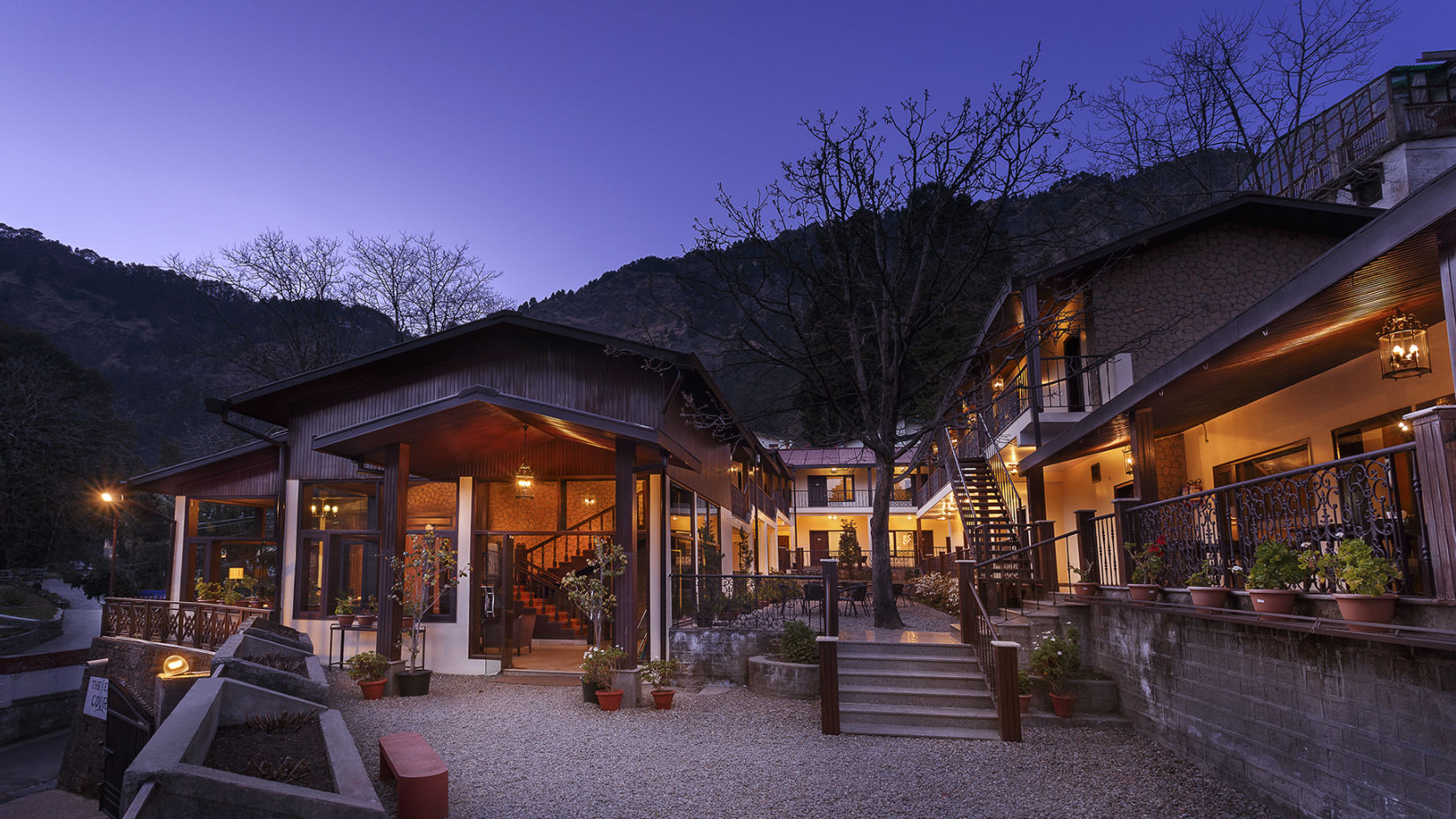
Park is Hideaway
River Lodge. Hideaway River lodge is situated
next to the Ramganga River that runs through the Corbett tiger
reserve and is one of the great beauties of the Park. The
crystal clear waters of the Ramganga snakes its way through
the steep sided valleys, surrounded by thick forest and dense
jungle. Involved in Mahaseer Conservation along with the
Forest Department and Forestry Commission of Uttarakhand, this
lodge provide excellent angling opportunities.
Anglers consider the Golden or Himalayan Mahaseer (tor
putitora) as the main species available on the Ramganga / Kosi
rivers, besides the Silver and Black Mahaseer. Goonch
(bagaraus bagarius), a fresh water scavenger is also another
species that thrives in these rivers.
The challenge and thrill of an encounter with the Mahaseer
attracts anglers from all over the world. It offers a holiday
with a fish, which not only rules the Indian waters like the
tiger does the jungle, but also fights the way no one can.
Our (Gillie) fishing experts from the local communities are
involved in Mahaseer conservation and have the experience of
fishing this section of water for many years now, and we have
selected stretches of water that would suit every level of
angler for a complete fishing experience.
The Ramganga River holds varied features for the angler to
try, from white water rapids to deep holes filled with
tackle-breaking rocks and tree stumps and lovely sallow
sections from where fly anglers can target specific fish in
the clear water and cast to it. There are a number of ways in
which one can fish this river but no matter what your style,
the fish can be seen and caught at very close quarters in the
typically clear glacial waters of this area. We can also offer
Jungle jeep drive and Elephant back safari through the Corbett
National Park.
The Golden Mahsheer
Mahaseer in local lingo means The
Big Mouth and is known to be the toughest among the fresh
water sport fish. Mahaseers habitat, the Ramganga River
has clear and fast flowing water with a high level of
oxygenation. Being a migratory fish, the Mahaseer moves
downstream in winters to warmer waters. As the Mahaseer has good
sense of smell, it can detect food from quite a distance and its
diet mainly consists of smaller fish & aquatic arthropods.
The habitat of the Mahaseer has high currents & fast flowing
water, this fish is an ultimate swimmer and can go upstream
through rapids of 20-25 knots. The largest specimen even caught
was 121 lbs.
The Process
The time to angle the big Mahaseer is when
they return after breeding to chase the shoals of minnows.
Angling the Mahaseer is a virtual battle of strength, tact and
speed. On overcast days the fish tend not to bite in the regular
places, therefore trying out new places is advisable. Use 'hing'
or asafoetida paste in your bait and let it lie in a deep pool
next to a big rapid. Remember, patience is the virtue of the
angler when fishing with ground bait. With fly bait, you can
land upto 50 pounds of fish in the calmer areas around the
rapids.
Remember, there is more oxygen in rapids and that is the reason
why the big fishes are primarily concentrated in and around
these areas. On catching a Mahaseer, don't try and stop the
first run, hold the line tight and let the fish complete its
first run. Remember the fish can see you, therefore make sure
you avoid its eye. Do not disturb the water where you intend to
fish, as the fish can hear any disturbances on the surface.
Patiently sit it out and try for other fish.
During a snag, the line remains constantly in one place but if a
big fish is on the line, then the line will keep moving on water
and will not stay in one place. If the line is snagged, don't
pull or you will snap your line but if the fish is on the line
and is not snagged, then try to wear it out, before it tires you
into making a mistake. Keep fighting and reeling in, never let
the fish rest. Learn the importance of pumping your rod and keep
your reel properly oiled. Also, try and discard a shredded line.
The best ways of Mahaseer fishing is spinning. It is
a fish known for is fighting abilities and, after hooking one,
you will realise the amount of its strength. It is the largest
member of the carp family in the world.
Spinning Tackle
One needs a good quality, medium to
heavy spinning / carp rod, ideally ranging from 2lb to 3lb and 8
-10ft. This will be more than enough for both spinning and paste
fishing.
Reels should be big enough to hold a good 200m of 20lb line and
good quality size bait runners are perfect for every situation.
They double up and allow one to stop and bait fish for an hour
or two after spinning for the morning session, so one reel does
two jobs. (A spare reel is always advised to be carried in case
of a fault occurring) Spinners are easy to arrange, get a good
selection of silver, bronze and gold Mepps in size 3, 4 and 5.
These are great for fooling fish in broken water and for working
amongst the rapids, rocks and old trees lining the river.
Plugs and lures are also used, but only the smallest lures one
can buy, will see any action. And again these should be totally
natural in their colour and in sizes ranging from 3 inches up to
5 inches. When using lures, make sure one has spare hooks and
good quality split rings for any repair work that might need
doing.
Hooks are very simple. A good, strong, heavy-wire saltwater
long-shank hook in 1/0, 2/0 and 3/0 are perfect for paste
fishing with singles, trebles also playing a big part in paste
fishing. This is especially when small fish are present, so make
sure you have some super strong trebles in size 1 and 2. These
will be all you need for this style of angling.
Line needs to be as clear as possible, because the Ramganga
River and other rivers of north India are crystal clear with
fresh glacial water flowing in from the Himalayas. A dark line
just gives the game away, so keep your eyes open for anything
clear and transparent, not white. Fluorocarbon in 20lb and 30lb
will also be used for hook lengths when paste fishing. 2 x 600
metre spools should be enough for a weeks fishing, but always
change the line after a good battle for a lost fish.
Fly Fishing
For fly fishing, you will need fairly stout
gear and appropriate line. 8, 9 and 10 weight rods are perfect
for the Mahaseer fishing in the Corbett National Park. Match
this with a good quality reel loaded with a sinking fly line and
150 - 200 yards of 20 or 30lb backing. Flies that will work best
are Streamers, Muddlers, Tubeflys and anything that resembles
small fry or insects. Then, a larger selection is needed that
will imitate the small bait fish you will find in the river,
normally 2-5 inches long and have brown / silver scale patterns.
Other good patterns are small crabs and large larvae imitations,
such as dragonfly larvae that resemble a big beetle, and are
usually around 1 -2 inches long with dark brown skin.
Fishing the drift, on a swift section of river, just above the
rapids, is ideal when targeting the Mahaseer. In the Ramganga
River, you will not only find raging sets of rapids, but you
also have networks of deep pools that spill down the mountains
connected by rapids. These deep pools are a great place for
fishing in the heat of the afternoon sun, when the Mahaseer can
be found concentrated here. When you fish these deep pools it is
best to cast upstream from a good elevated spot, and allow the
fly to hug the bottom of the river and bounce the fly along,
keeping as tight a line as possible. Sometimes bites are very
shy and sometimes not, so always keep in contact with the fly
and feel your way around the pool. From here, you will be able
to quickly pursue a running fish and find good landing ground.
Eddies of the current, where the fast moving water meets the
slack or even dead water, allow the fly to work along this
crease and you will find the predatory Mahaseer lurking in the
quick water waiting to ambush the fly.
Optional items
- Scales to weigh up to 120lb at least and sling to match
- Floats, quivertips, swimfeeders etc for bait fishing
- Rod rest
- Lightweight butt pad.
Boots
Felt lined wading boots are a must. Other Things
to Carry
- A light rain suit for the occasional shower or boat spray
- Polarized sunglasses (2 pairs) Amber, yellow, green or
grey
- Sunscreen and lip protection (15spf or higher and
waterproof)
- A good fishing hat that will both keep the sun off you as
well as cut down on glare (dark billed)
- Camera with film & Extra batteries
- Insect repellent
- Extra light clothing for fishing to help keep the sun off
you
- Reading materials
- Good walking shoes
- A travel alarm clock
- A small flash light
- Personal Medication
- Zip lock bags
- Pocket-knife
Best Time to Visit
In Autumn (Sep/Oct/Nov), as the
rivers begin to clear after the monsoon, and in
Spring(March/April/May), when the early monsoon rain begins to
raise the level of the rivers again. The Himalayan Rivers can be
expected to clear around the end of September. In spring, the
optimum fishing time can be variable ranging from the beginning
of March to end of May. Fishing is stictly prohibited during
monsoon as it is the breeding time for the fish.
Do's and Don'ts
Angling as sport, is a pure call from
Inside and a pure angler will have his own Ethics to maintain
the purity of the sport. Here are some points we would like to
put in for our clients:
- Understands fishing and local regulations & customs.
- Care about aquatic and marine habitats.
- Adhere to the angling rule of Corbett National Park i.e
Catch & Release
- As fishing takes you to some most pristine area therefore
leave no trash, even if left by others.
- Cooperates with authorities.
- While fishing in the forest do not disturb other wildlife
- Keep all the fishing equipment in a kit. Do carry landing
net and guff along with the kit.
- While carrying the rod in the stretched from, never keep
the top of the rod in front because it is not safe; instead
butt-end be kept in front.
- Always wear footgear suiting to the terrain.
- Keep fishing knives sharp and cover the blade when not in
use.
- Use safety glasses at all times when casting.
Accommodation
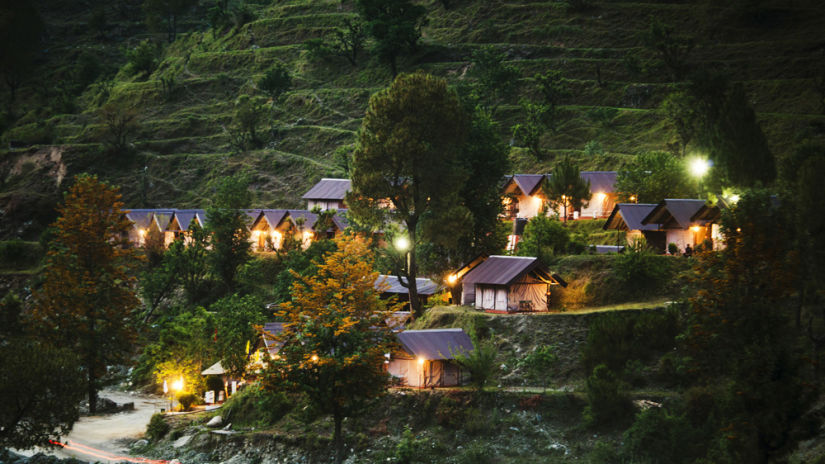
The camps are safari style tents with
sleeping bags and rolling beds. Our support team including
Naturalist, Angling Guide, Gillie, Driver Attendant & Chef
would be there to assist you for your wilderness programme.
Food
The food served on the Angling trips and
expeditions trip consists of a great variety, with special
emphasis on the freshness of produce. You not only get to choose
from a wide variety of Continental and Indian cuisines, but also
savour specialties of the Kumaon region from time to time. Food
is primarily vegetarian inside the forest. However egg is served
on the trip.
Tariff
It varies as per program. Please find the
tariffs for various itineraries
Terms and conditions
- The operation of the itinerary and route is subject to
the approval of forest authorities.
- Maximum strength on one angling expedition is 20 persons.
- A non-refundable advance of 50% will be required for the
confirmation of the booking.
- The tariff does not include transport from Delhi to
destination and back.